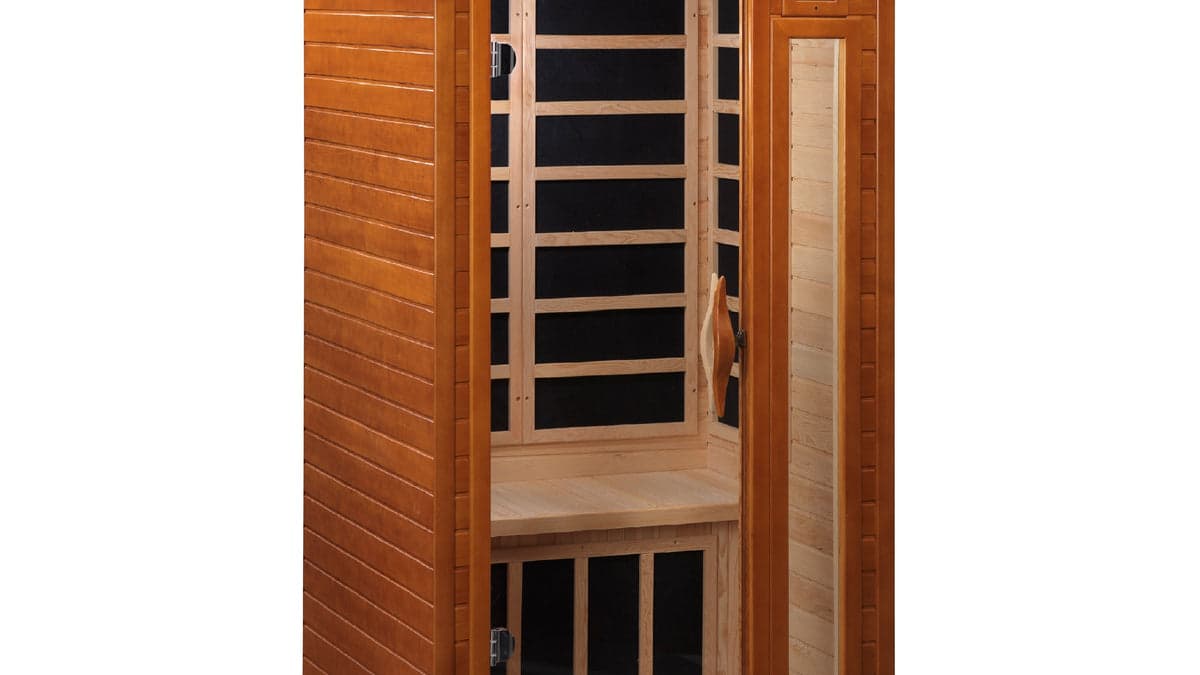
Why Infrared Saunas Are Different
Infrared saunas work differently than traditional steam saunas. Instead of heating the air around you to extreme temperatures, they use far-infrared light waves to penetrate 1 to 2 inches into your body tissue and warm you from the inside out. The result is a deep, efficient sweat at a much more comfortable ambient temperature, typically 120°F to 150°F versus 180°F to 200°F in a Finnish-style sauna.
This difference matters for health benefits. The lower air temperature makes infrared saunas easier to tolerate for longer sessions, and the deeper tissue penetration is associated with distinct physiological responses, including increased heart rate, improved circulation, and elevated core body temperature, that drive many of the benefits described below.
A note on the evidence: most of the robust clinical research on sauna health benefits was conducted using traditional Finnish saunas. However, infrared saunas produce comparable cardiovascular and thermoregulatory responses, and a growing body of research is specifically studying infrared exposure with similarly encouraging results. We will note the source of the evidence throughout this guide.
Ready to explore your options? Browse our infrared sauna collection to see the models we carry.
1. Cardiovascular Health and Heart Function
The most well-studied benefit of regular sauna use is cardiovascular health. A landmark series of studies from the University of Eastern Finland, led by Dr. Jari Laukkanen and published in journals including JAMA Internal Medicine and the American Journal of Hypertension, followed over 2,300 Finnish men for up to 20 years. The findings were striking: men who used a sauna 4 to 7 times per week had a 48% lower risk of fatal cardiovascular disease compared to once-per-week users, and significantly reduced rates of sudden cardiac death and all-cause mortality.
While that research used traditional saunas, the mechanism is well understood and applies to infrared sauna use: heat causes blood vessels to dilate, increasing circulation and lowering peripheral resistance. Your heart rate rises to 120 to 150 beats per minute, equivalent to moderate-intensity exercise, and cardiac output increases substantially. Over time, regular thermal stress appears to improve endothelial function (the health of your blood vessel lining), reduce blood pressure, and support overall vascular health.
Infrared saunas specifically have been studied in patients with chronic heart failure, where regular sessions improved exercise capacity and reduced symptoms without adverse effects (Tei et al., Journal of Cardiology). Always consult your physician before beginning sauna use if you have any diagnosed cardiovascular condition.
2. Muscle Recovery and Athletic Performance
For athletes, fitness enthusiasts, and anyone dealing with post-exercise soreness, infrared saunas offer a well-supported recovery tool. Heat exposure triggers the production of heat shock proteins (HSPs), a class of molecular chaperones that protect cells from stress damage and facilitate protein repair. This cellular response accelerates muscle tissue repair after intense exercise.
Beyond HSPs, heat causes muscles to relax by reducing lactic acid buildup and improving the removal of metabolic waste via increased blood flow. Many athletes report reduced delayed-onset muscle soreness (DOMS) with regular post-workout sauna use, though individual responses vary.
A study published in the Journal of Science and Medicine in Sport found that post-exercise sauna bathing significantly increased growth hormone levels, a key anabolic hormone involved in muscle repair and adaptation. The effect was more pronounced with repeated sauna sessions, suggesting cumulative adaptation.
For practical recovery use: a 20 to 30 minute infrared sauna session 30 to 60 minutes after exercise, at 130°F to 150°F, is a well-tolerated protocol. Hydrate well before and after. Explore our full sauna lineup if you are looking for a model suited to post-workout recovery.
3. Stress Reduction and Sleep Quality
Infrared sauna use consistently ranks among the most effective tools for stress management, and the mechanism is straightforward. Heat exposure activates the parasympathetic nervous system, the "rest and digest" branch, while simultaneously suppressing cortisol (the primary stress hormone). The result is a state of deep physical relaxation that can persist for hours after your session ends.
The effect on sleep is particularly compelling. Core body temperature naturally drops in the evening as a signal to the brain that it is time to sleep. A sauna session in the late afternoon or early evening accelerates this temperature drop in the hours afterward, reinforcing the body's sleep onset signal. Multiple studies have found that regular sauna use improves subjective sleep quality, sleep onset latency, and time spent in deep (slow-wave) sleep.
For stress relief specifically, the combination of heat, enforced stillness, and the release of endorphins during sauna use creates a meditative, deeply relaxing experience that many users describe as more effective than conventional relaxation techniques. Regular users often report lower baseline anxiety and an improved capacity to manage daily stressors over time.
4. Pain Relief and Inflammation
Infrared heat penetrates deeper into soft tissue than the radiant heat of a traditional sauna, which makes it particularly effective for musculoskeletal pain relief. The deep tissue warming reduces muscle spasm, increases joint flexibility, and promotes the release of endorphins, the body's natural pain-relief compounds.
For chronic conditions, research is encouraging. A randomized controlled trial published in Clinical Rheumatology found that infrared sauna therapy significantly reduced pain and stiffness in patients with rheumatoid arthritis and ankylosing spondylitis after a series of sessions, with benefits lasting 30 days after the treatment period ended. Patients with fibromyalgia have shown similar improvements in pain scores and fatigue levels in published studies.
The anti-inflammatory mechanism is multifactorial: heat exposure reduces levels of pro-inflammatory cytokines, improves circulation to inflamed tissue, and activates heat shock protein production, all of which work together to reduce the inflammatory burden on the body. For those dealing with chronic low back pain, one of the most common wellness complaints, a regular infrared sauna practice is worth discussing with a healthcare provider as a complementary approach.
5. Skin Health and Detoxification Support
Sweating is one of the body's primary mechanisms for eliminating certain waste products, and infrared saunas produce a particularly deep, sustained sweat at temperatures that are tolerable for extended sessions. Research has detected measurable quantities of heavy metals (including lead, cadmium, and arsenic), bisphenol-A (BPA), and other environmental compounds in sauna sweat, suggesting that regular sauna use may support the body's natural detoxification pathways alongside the primary organs, the kidneys, liver, and lymphatic system.
For skin health, the increased circulation from sauna use delivers more oxygen and nutrients to skin cells, while sweating itself helps clear pores and remove surface debris. Many regular sauna users report noticeable improvements in skin tone, texture, and clarity after establishing a consistent sauna routine. The collagen-stimulating effects of near-infrared wavelengths (available in full-spectrum models) offer an additional skin benefit not present in far-infrared-only units.
Important note: sweating is a supplement to, not a replacement for, kidney and liver function in detoxification. The claims you may see from some vendors about saunas "cleansing" the body of all toxins are overstated. The evidence for sauna-assisted elimination of specific compounds is real, but modest. The broader systemic benefits described in the other sections of this guide are more clinically significant.
How to Get the Most Out of Your Infrared Sauna
Session Length and Frequency
For most of the health benefits described above, especially cardiovascular and metabolic, research suggests that sessions of 20 to 40 minutes, 3 to 7 times per week, produce the best outcomes. More frequent use (4 to 7 sessions per week) shows significantly better results than 1 to 2 sessions per week in the cardiovascular research. Consistency over time matters more than any single session.
Temperature
Beginners should start at 110°F to 120°F and gradually increase toward 130°F to 150°F as tolerance builds. Unlike traditional saunas, you do not need to push into uncomfortable temperatures to get results, the infrared wavelengths penetrate tissue regardless of ambient air temperature, so a comfortable 130°F session delivers real physiological benefits.
Hydration
Drink 16 to 24 oz of water before your session and replace fluids afterward. Adding electrolytes (sodium, potassium, magnesium) to your post-sauna hydration is beneficial, especially if you sweat heavily or sauna multiple times per week.
Timing
Post-workout sauna use supports recovery. Evening use (1 to 2 hours before bed) supports sleep via the temperature drop effect. Avoid saunas immediately after heavy meals. If you are using your sauna in the morning, give yourself 30 to 60 minutes of wake time first.
Who Should Consult a Doctor First
Talk to your physician before starting a sauna practice if you are pregnant, have unmanaged hypertension, have a history of heart disease or arrhythmia, are taking medications that affect thermoregulation, or have any condition that impairs sweating. Infrared saunas are safe for the vast majority of healthy adults, but individual circumstances matter.
That schedule is the part most people underestimate. The section below prices the hardware that makes 4 to 7 sessions a week realistic at home, including the one spec that decides whether you need an electrician.
What It Takes to Run This Protocol at Home
Every benefit described above depends on frequency. The cardiovascular research is built on 4 to 7 sessions per week, and the recovery and sleep sections assume a session you can take whenever you want one. Nothing kills that schedule faster than a sauna you have to drive to, or one you cannot plug in.
So the practical question is not which wavelength you want. It is whether the cabin you are looking at runs on the outlet you already have. Here is the spec that decides it, taken from the manufacturer sheets for the indoor infrared cabins we stock:
| Model | Capacity | Electrical | Price |
|---|---|---|---|
| Dynamic Barcelona | 1-Person | 120V / 15A (standard household outlet) | $1,899 |
| Dynamic Santiago Elite | 2 person | 120V / 15amp (standard household outlet) | $2,299 |
| Dynamic Cardoba Elite | 2 Person | 120V / 15A (standard outlet) | $2,299 |
| Dynamic Bergamo | 4 Person | 120V / 20A (dedicated circuit) | $3,299 |
| Dynamic Lugano Elite | 3 Person | 120V / 20A (dedicated circuit) | $2,999 |
The pattern is worth stating plainly, because it is the opposite of what most buyers assume: 1 and 2 person infrared cabins run on an ordinary 120V household outlet. No electrician, no panel work, no permit. The step to a dedicated 120V 20A circuit arrives at the 3 and 4 person sizes, which is still standard residential wiring, just its own breaker. If you are sizing for one or two people, the electrical is not a barrier and it should not be the reason you delay.
240V service is the exception rather than the rule here, and it is worth being precise about where it starts, because a lot of published advice gets this wrong. Across the 88 infrared cabins we list, only four call for 240V: the Finnmark FD-3, and the 6 to 8 person models. Traditional and hybrid steam saunas are a different story entirely, since a rock stove draws far more than an infrared emitter panel, and those do need 240V well below the 6 person mark.
Running cost follows the same shape. A 40 minute session including preheat is well under a dollar at the US average electricity rate, so a 4 to 7 session week is a few dollars a month rather than a line item you will notice. We worked the arithmetic out size by size in our guide to what an infrared sauna costs to run.
Not sure which size fits your room? Browse the full infrared sauna range, or request a personalized quote and we will size it against your space and your outlet before you spend anything.
Frequently Asked Questions
How often do you need to use an infrared sauna to get the benefits?
The research behind the benefits in this guide is built on 20 to 40 minute sessions, 3 to 7 times per week. In the cardiovascular work, 4 to 7 sessions per week produced significantly better outcomes than 1 to 2. Consistency over months matters more than the length or heat of any single session, which is why access is the practical variable most buyers underestimate.
What temperature should an infrared sauna be set to?
Start at 110°F to 120°F and build toward 130°F to 150°F as your tolerance develops. Unlike a traditional Finnish sauna, you do not have to push into uncomfortable air temperatures to get a physiological response, because the infrared wavelengths penetrate tissue regardless of how hot the air is. A comfortable 130°F session is a real session.
Is the sauna research based on infrared saunas or traditional saunas?
Most of the large, long-running clinical evidence, including the University of Eastern Finland cohort of more than 2,300 men followed for up to 20 years, was collected in traditional Finnish saunas. Infrared saunas produce comparable cardiovascular and thermoregulatory responses, and they have their own published work, such as the Tei et al. research in chronic heart failure patients. We flag which type of sauna a finding came from throughout this guide rather than blurring the two.
Do infrared saunas actually detox the body?
Partly, and the honest version is narrower than most marketing suggests. Studies have detected measurable quantities of heavy metals such as lead, cadmium and arsenic, along with BPA, in sauna sweat. That is real, but it is modest, and sweating supplements the kidneys, liver and lymphatic system rather than replacing them. Vendor claims that a sauna cleanses the body of all toxins are overstated.
Who should talk to a doctor before starting sauna sessions?
Speak with your physician first if you are pregnant, have unmanaged hypertension, have a history of heart disease or arrhythmia, take medications that affect thermoregulation, or have any condition that impairs sweating. Infrared saunas are well tolerated by the large majority of healthy adults, but individual circumstances decide this, not a general rule.
Does a home infrared sauna need special wiring to run this often?
Usually not at the sizes most households buy. Across the indoor infrared cabins we stock, 1 and 2 person models run on an ordinary 120V 15A household outlet with no electrician and no permit. The step up to a dedicated 120V 20A circuit arrives at the 3 and 4 person sizes, which is still standard residential wiring on its own breaker. 240V service is the exception rather than the rule for infrared.
Tags
Need help choosing?
Tell us your space, budget, and goal, we'll send 2-3 real picks with accurate freight and transparent pricing. One reply from a US-based specialist within a few business hours. No spam.